
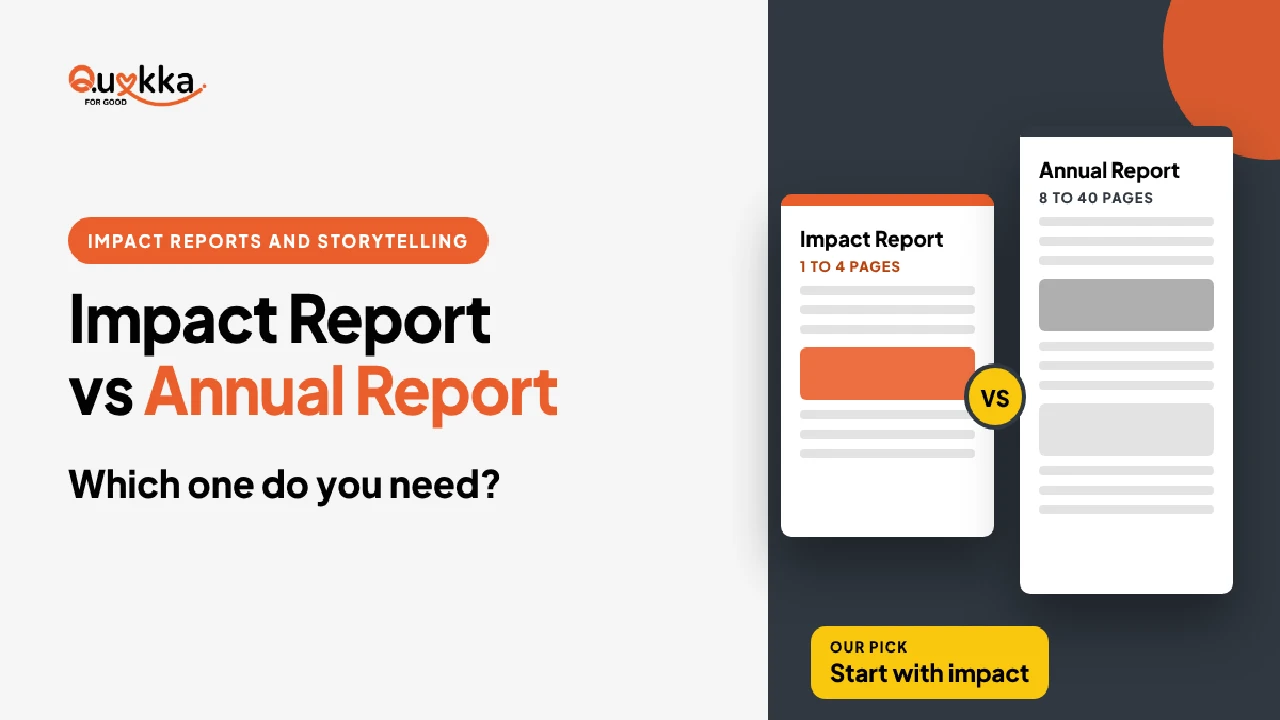
The short answer: most small nonprofits need an impact report first. It is short, it is for donors, and it shows results. An annual report is longer and covers the full year, including money and governance. Some funders, boards or local rules ask for one. Here is how to choose.
The two reports side by side
| Impact report | Annual report | |
|---|---|---|
| Main goal | Show what changed because of your work | Show what happened in the whole year |
| Main reader | Donors and supporters | Board, funders, partners, the public |
| Length | 1 to 4 pages | 8 to 40 pages |
| Content | Results, stories, a few numbers | Finances, programs, board list, plans |
| Tone | Warm and personal | Formal and complete |
| Time to make | Days | Weeks |
Rules for annual reports differ by country and by region. Check what applies to you.
3 questions to decide
- Who must see it? If a funder, a board or a law asks for a full report, you need an annual report. If you want to move donors, you need an impact report.
- How much time do you have? With a small team, a one-page impact report is easy to finish and easy to send.
- What do you want the reader to do? For "give again," use an impact report. For "trust us with a large grant," add an annual report.
Our pick
Start with a one-page impact report. Send it every year. When your budget, your team or a funder asks for more, add an annual report and reuse the same numbers and stories.
Your next step
Take our Impact Report Readiness Check to see what data you already have. Or Book Your Free Discovery Call and we will help you choose.